Ceny polymérov – korekcia cien surovín a ďalšie obmedzenie ponuky
- BRENT oil price (24.10.2025) 65.940 USD/barrel, rising prices compared to the end of the previous week
- NAPHTHA European; (24.10.2025) 527.33 USD/t, rising prices compared to the end of the previous week,
- October contract monomer prices:
- Ethylene (C2) contract price: roll-over (1,130 EUR/t),
- Propylene (C3) contract price: roll-over (1,005 EUR/t),
- Styrene monomer (SM) contract price: -51 EUR/t (1,205 EUR/t),
- Dutch TTF Gas Futures (24.10.2025) 31.89 EUR/Mwh, stagnant prices compared to the end of the previous week,
- EUR/USD (24.10.2025): 1.162 EURO stagnant compared to the previous week,
- Polymer capacity news
-
- Persistent production problems
- Karpatneftekhim (Kalush, unplanned shutdown, HDPE 110 kt/year capacity)
- Ongoing maintenance/outages/malfunctions:
- Expected maintenance/shutdowns:
- Unplanned shutdowns:
- Grupa Azoty Polyolefins, unplanned shutdown (Police, Poland, 430 kt/y PP capacity affected). No news yet about a restart.
- MOL Petrochemical FM, (220 kt/year HDPE capacity affected). The plant is up and running but FM is still in force.
- Persistent production problems
Demand was weak in the first half of last week, but in the second half of the week polyolefin demand picked up, partly due to the MOL fire. Converters that use MOL Group polymers have started making safety purchases. As a result, the prices of MOL polyethylenes and polypropylenes increased slightly at some traders. Some competitors also started to push their prices up for both PPH, HDPE and LDPE. The other significant turn of events was the US sanctions imposed on LUKOIL, which also apply to LUKOIL Neftochim. As a result, on the one hand, the supply of polypropylene in the South Central European region will narrow, and on the other hand, the cheapest prices will increase.
However, the Serbian NIS a.d. and its subsidiary HIP-Petrohemija are also hit by sanctions, so although there are significant stocks of polyethylene, these can only be purchased in Serbian dinars (RSD) through some Serbian banks. The NIS a.d. sanctions and the MOL fire together significantly affect the propylene monomer supply, thus making the production conditions of the Serbian HIPOL more difficult. Only the Romanian producer has no problems; the explosion at Petrotel-Lukoil SA last week has no impact on Rompetrol's production.
The fire occurred in the AV-3 distillation plant of MOL's Danube Refinery. This represents 30-40% of MOL's Százhalombatta refinery capacity. The damage is still being assessed, and it is not yet known how long this distillation plant will be shut down. It is not yet known how this will affect MOL Petrochemical's NAPHTHA supply and polymer production. It is likely that there will be no need to completely stop the production of polyolefins, but it is likely that, similar to previous cases, a steam cracker will have to be shut down. For the moment, the question is: which capacity path to take: 370 kt/year or 290 kt/year? The reduction of ethylene production will also affect Borsodchem's PVC production, but it is not yet known to what extent and whether it will have to be shut down or its capacity reduction will be sufficient.
Prices for the coming month will be significantly affected by the fact that the new EU-US tariff agreements, which should in principle come into effect on November 1st, will reduce the tariff rate on polyethylene and polypropylene coming from North America from the current 6.5% to zero. So far, no final and official announcement has been made about the agreement.
On the demand side, the biggest risk is that most plastics converters are operating with low polymer inventory levels. This makes it difficult or impossible to bridge a temporary supply squeeze of several weeks. Already last week, it was noticeable that well-informed companies began making security purchases and were looking for alternative sources of supply. Security buying is likely to pick up in the week ahead. Even less scary companies will buy. This will break the downward trend in prices, and as has been the case in the past week, could even bring small price increases.
One of the effects of the sanctions imposed on Lukoil is the increase in oil and NAPHTHA prices. The BRENT price rose by 7.9% in a week, while the NAPHTHA price rose by "only" 2.5%. The increase is not expected to stop here, at least the price of naphtha will catch up with the level of BRENT price change, meaning a further 3-4% increase can be expected. This could even result in a roll-over in November olefin monomer prices. If panic breaks out, even a minor increase in olefin monomer prices is conceivable.
The November olefin monomer price, derived from current feedstock prices, shows a decrease of 40-50 euros, however, if the price increase of NAPHTHA continues, a roll-over or even a smaller price increase of 10-30 euros is conceivable. Styrene monomers (SM) are not affected by the above events for the time being, and the market continues to expect a price decrease of around 50 euros. However, since a significant part of SM comes from imports, through traders, they will increase their profits if there is an opportunity. As a result, SM prices may even increase.
In the fourth week of October, LDPE prices were between €920 and €1,050/t. The lower value of the price band increased slightly compared to the previous week. One of the major Western European LDPE producers, however, has already increased its prices by nearly 20 euros in its new offers. The reason for this was limited availability. Converters' price expectations point to a decrease, but due to the shrinking supply, this is unlikely in Central Europe. Since the price changes in monomer prices have become uncertain due to the increase in feedstock prices, even a minor price increase is not ruled out.
In the fourth week of October, the total price range in the MFR 0.6-1 transparent/translucent segment was €750-900/t, unchanged from the previous week.
Prices for grades with lower MFRs below 0.6 ≥, typically based on PIR, ranged from €800 to €950/t. It didn't change over the previous week.
Typically available in large quantities, in continuous supply, guaranteeing low gel count and containing partly virgin LDPE, prices are typically between €1,270 - €1,400, with list prices unchanged from the previous week.
In the fourth week of October, HDPE prices in Central Europe were between €880 and €1,050/t. The lower value of the price band has corrected upwards compared to the previous week. Due to the MOL fire, prices began to rise, not only in MOL's sales network, but also at some vigilant competitors. Demand will pick up in the coming week. MOL's customers are already looking for alternatives not only in the BM and FILM areas, but also in the IM grades. The expected narrowing of the diversified MOL HDPE portfolio cannot be compensated for by the smaller range of imported grades. Limited availability and even a slight price increase are expected from Central European manufacturers in the coming week and in November.
In the fourth week of October, Central European HDPE-100 (Black & colored) prices were between €1,050 and €1,170 per ton. Prices did not change compared to the previous week, however, the lower end of the price range decreased due to promotional prices from some manufacturers. Demand is in line with the season, good. There is supply, but due to rising feedstock prices, a price correction is possible, and the cheapest promotional prices may disappear.
In the fourth week of October, LLDPE C4 prices were between €850 and €990/ton. The price range was unchanged from the previous week and the average price has stopped falling. According to preliminary news, there are already offers for December at a delivered price of €800/t. Some companies have probably already priced in the 0 tariff for December. However, with immediate delivery, most DAP/DDP prices are closer to 900 euros. Priced at 850 euros, they are mostly available near ports, in northern Poland and the Baltics. We expect a price decrease due to North American imports, which are expected to become cheaper.
In the fourth week of October,(m)LLDPE (C6) prices were between €870 and €1,300/t. The price of undoped LLDPE C6 was 870-1,020 €/t, while the price of mLLDPE was in a range of 1,000-1,300 €/t. For metallocene grades, delivered prices close to €1,000 have appeared from import sources. The port price of imported mLLDPE (Antwepen/Gdansk) is €950/t. Price bands have not changed from the previous week. In North America, there is a significant oversupply, so there is a lot of selling pressure. Meanwhile, the market is waiting for the EU-US tariff agreement. If it goes into effect as planned, it will mean further price reductions, especially at the lower end of the price bands.
In the fourth week of October, PPH Raffia prices were in the €820-1,000/t price range. The lower price band decreased and the upper price band increased compared to the previous week. The lower value of the price range is represented by the delivered prices of a Bulgarian producer; the FCA prices of the same producer are below €800/t. The impact of the sanctions is not yet visible, but the lower value of the price band is expected to start rising next week. However, average prices are still well around €940.
The Serbian manufacturer still has limited availability, and they cannot serve all customers. The Romanian manufacturer seems to have availability for the time being. Although the loss of the Bulgarian manufacturer clearly results in a narrowing of supply. If propylene monomer rolls over or increases, it will provide a clear opportunity to increase prices.
The BOPP grades were priced between € 870 and € 940/t. They have not changed, however, buyer indications are already projecting a price level of 830 euros by November. This is unlikely, we rather expect unchanged prices in November. Since the majority of BOPP grades are already imported, they are not affected by any potential price increase in Europe.
In the fourth week of October, the prices of PPH IM non-specialty grades with low and medium melt flow index were in a range of 840-1,060 €/t and the prices of PPH IM with high melt flow index were in a range of 840- 1,060 €/t. The lower price band decreased and the upper price band increased compared to the previous week. The lower value of the price range is represented by the delivered prices of a Bulgarian producer; the FCA price of the same producer is below this, close to €810/t. The increase in the upper value is due to panic buying due to the MOL fire. Demand is basically weak, southern and central European converters, which are most affected by the supply shortage, have stocks, and panic buying is not expected. However, in November, the cheapest prices will correct back to above €900, partly due to the loss of the Bulgarian manufacturer.
In the fourth week of October, PPC prices were between €950 and €1,150/t in Central Europe. The price range has not changed from the previous week. Demand is weak, supply is wide, mainly of Far Eastern grades. The propylene monomer price in November has become uncertain, not only in terms of its magnitude, but also its direction. This mostly affects European grades. Thus, the probability of price reduction is reduced for European grades. In fact, in the case of some Mol-specific grades, a price increase is more likely. Thus, the entire price range can be expected to widen in the coming weeks.
In the fourth week of October, the typical prices of MFI (8-15, 15-20) re-granulates of good quality, homogeneous color and narrow flow index range were in a range of €600-950/t. They did not change compared to last week.
PIR-based MFI (25-35) grades were priced between €800 and €1,050/t. The price range has not changed from the previous week.
In the fourth week of October, PPR prices were between €990 and €1,200/t. The price range has not changed from the previous week. Demand is weak, with several converters expecting prices to fall in November. However, the probability of this is decreasing, and we even expect a reduction in supply due to the MOL fire. Meanwhile, it turned out that the industrial use of PPR imported from the Far East in the food industry is questionable, and in some cases the migration tests are inadequate. Thus, prices may even increase in November for the upcoming Polish Christmas PPR season.
Prices for coloured pipe compounds ranged from €1,320 to €1,420/t. Due to weak demand, both the lower and upper values of the price range decreased compared to the previous week.
In the fourth week of October, typical EPS (white) prices were in the range of €1,200-1,300/t. The price range has not changed from the previous week. The MOL fire did not affect Dunastyr (Versalis). The market expects further price declines due to the expected fall in SM prices. However, turbulence around feedstock prices can quickly change expectations and the extent and even direction of SM price changes. With the season expected to last until mid-November, those converters who have stocks are in a good position.
GPPS prices in the fourth week of October ranged from €1,030 to €1,250/t, with the cheapest prices in the Baltic States for imported grades. Typical HIPS prices were between €1,120-1,330/t, the cheapest prices were measured in the Baltics, and they belonged to imported grades. The price bands were basically unchanged from the previous week, except for the lower end of the GPPS, which fell slightly. Demand has been weak over the past week, with expectations pointing towards a price decline in SM and PS.
In the fourth week of October, natural ABS prices were between €1,450 and €1,700/t. The price has not changed compared to the previous week. Demand is still weak, few transactions take place.
In the fourth week of October, prices for Central European virgin PET Bottle grades were between €800 and €900/ton. The price range has not changed from the previous week. The cheapest grade was imported from outside Europe. Average spot prices for European producers were between €830 and €840/t. Demand is weak, few transactions have taken place.
For rPET granules, prices for the European 'clear food-grades' ranged from €1,400 to €1,700 per ton, depending on quality. Turkish import grades were available at €1,300/t while Far Eastern grades were available at €1,200/t. Prices have not changed from the previous week.
Prices of transparent rPET flakes: were between €1,220 and €1,300/t. Compared to the previous week, the price range has not changed.
For color blended rPET flakes, prices ranged from €500 to €600/t.
In the fourth week of October, European PVC (K67-68) prices were between €810 and €920 per ton. The price range has not changed from the previous week. However, prices are under pressure due to weak demand and increasingly cheaper imports. South Korean and Chinese imports are keeping EU markets under price pressure, while North American imports offer non-EU South Central European countries a three-digit price advantage over European grades. In contrast, European PVC producers are struggling for profitability. The MOL fire will probably indirectly reduce the supply of PVC in Central Europe. It is possible that the price of ethylene monomer will not decrease in November. This creates a new situation, as it is likely that imports arriving at South Central Europe (SCE) ports, primarily from South Korea, will drive down average prices, while European PVC producers will not be able to follow the price decline. Moreover, if the Hungarian PVC producer is forced to reduce its supply, it is possible that it will be squeezed out, similar to Western European PVC producers, or at least experience a significant loss of market share in these countries. It is no coincidence that anti-dumping proceedings are being prepared in Brussels against Chinese and South Korean PVC to protect European markets.
-

myCEPPI
myCEPPI poskytuje týždenný cenový report komoditných plastov.



-

Genesis Polymers Europe a Velogy približujú zákazníkom európsku výrobu PP a PE na veľtrhu Fakuma 2026
Spoločná účasť na veľtrhu Fakuma (hala B2, stánok 2310) predstavuje rastúcu európsku polyolefínovú platformu, ktorá spája výrobné kapacity... -
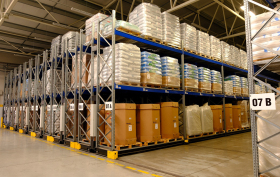
VACULA s.r.o.: Stabilné dodávky plastových granulátov aj v časoch neistoty
V súčasnej zložitej situácii na globálnom trhu, ovplyvnenej okrem iného aj geopolitickým napätím, čelí mnoho firiem neistote v dodávateľských... -
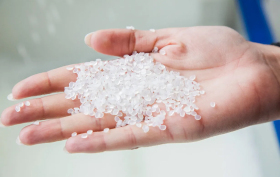
LIFOCOLOR radí: Ako vybrať vhodnú veľkosť granulátu do výroby
Máte problém s kolísaním farebného odtieňa, segregáciou materiálu v násypke alebo s nepresným dávkovaním? Jednou z príčin môže byť nesprávne...